
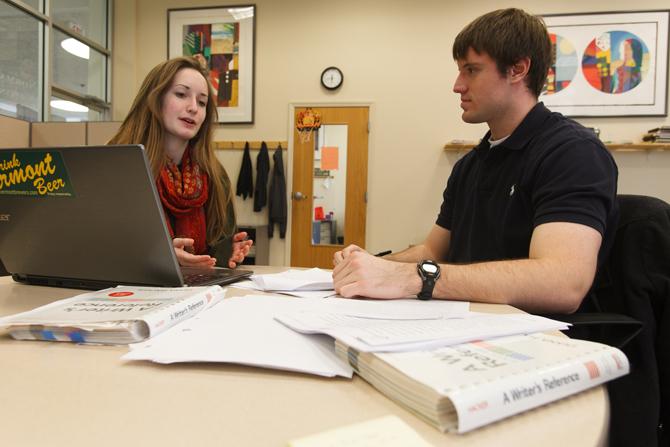
I spend a lot of afternoons in the campus writing center, and most days feel like this loud mix of scribbled notes, half-finished coffee cups, and students rushing in at the last second hoping to make something better before class. I like that pace. It keeps me awake, and it reminds me why I enjoy tutoring so much. People think a writing session is all about fixing things, but to me it feels more like teaming up for an hour. We sit side by side, look at their pages, and try to spot the parts that already shine. That is usually where the real progress starts.
I figured this out after watching a friend freeze up when someone tried to give her a long, heavy writing critique. She shut down the second she felt judged. I remember thinking that writing does not survive that kind of pressure very well. It needs air, and a little energy, and someone who actually wants to help instead of sounding like they are handing out grades. So now, when a student sits with me, I start with the lines that pop. Everyone relaxes fast when they hear something good first. They sit up straighter. They start to feel like they are not battling their own work anymore.
Then we wander into the trickier stuff, and I keep the mood light because that is the only way people stay open to change. Sometimes a sentence rambles, or a moment feels flat, or a paragraph climbs all over itself. I tell them that none of this is a big deal. We just nudge things around. We make things clearer. I point at a sentence and say, try this shorter. Or I ask what they really meant in a spot where the meaning got buried. Most students know the answer right away; they just needed to hear the question out loud.
One girl came in last week with a personal story she had rewritten so many times that she could not see it anymore. She dropped her backpack, rubbed her forehead, and said she did not even know what she wanted from the piece. We read it together, and I showed her two sentences that already worked great. Her face changed right then. She said she forgot she could write something decent. Once she saw those bright lines, everything else became easier to adjust. That moment is always the best part for me. People think improvement comes from pointing out mistakes, but half the time it comes from reminding someone that they can already do something well.
When we get into the bigger changes, I keep things moving fast because students think better when they are not stuck in their heads too long. I might read a paragraph out loud and say, this part is strong, but this middle section loses steam. What were you going for here? They answer right away, and usually the answer is better than what ended up on the page. I tell them, say that. Put that exact feeling into the paragraph. They try it. They rewrite a line or two. We read it again. And suddenly it works. They can hear it. That small jump from confusion to clarity is one of my favorite things to watch.
I guess that is why I love these tutoring shifts so much. It is not about correcting people. It is about helping them see their own writing with fresh eyes. And honestly, the teamwork feeling makes the job way more fun. When a student looks up and says, oh, that makes sense now, I get this little spark of pride. Not in me, but in them. They did the work. I just pointed the flashlight at the right spots. I know it sounds small, but those tiny victories stack up. After a while, students start to trust their instincts more. They start trying new things. They stop being scared of the page.
I used to think writing was something you figured out alone, but I do not believe that anymore. Even strong writers need another pair of eyes. Even confident writers need someone who listens. When I learned that, everything about tutoring became easier. You are not there to judge the page. You are there to help someone see it clearly. That shift changed how I write too. I started looking at my own drafts with the same kind of gentle curiosity. I ask myself the same questions I ask students. I try to find the bright spots first. It feels better, and it actually helps me improve faster.
And when someone comes in asking how to get better at writing critique, I always tell them the same thing: start by noticing what is already working. That single habit changes everything.
Sometimes I forget how much courage it takes for students to hand over their pages. I see it in the way they slide the paper across the table like it is something fragile. I always tell them that writing is not a test; it is just a conversation. That usually gets a small laugh, and once people laugh, even a tiny bit, they relax into the work. I like to lean back in my chair a little, or turn the page sideways, just so the whole thing feels less stiff. If the room feels too serious, no one wants to change a thing. But when the room feels friendly, ideas move around more easily.
There is a student named Jeremy who comes in with these wild essays full of huge ideas. He writes like he is sprinting. You can almost see his brain jumping ahead of his hand. His pages are exciting, but sometimes they fly so fast that the reader gets lost. The first time he came in, he talked a mile a minute about how he wanted the piece to feel like a rushing train. I remember nodding and saying, I get it, but you still want the reader on board. He laughed so hard at that, and the laugh broke open the whole session. We found places where the train could slow just enough for people to hop on. He kept the energy, but he made the meaning clear. It felt like watching someone figure out the beat of their own voice in real time.
I have started keeping a list of little questions I ask when someone gets stuck. Questions help more than instructions. A question makes the writer think like a writer again. Things like, what did you want the reader to feel here, or, which part matters most to you in this paragraph. Nine times out of ten, the moment they answer out loud, they know exactly what to fix. I think their own answer is always better than anything I could tell them. My job is to guide them toward that answer, not hand them a perfect line. Half the fun is watching people discover that they already know what to do.
There was one afternoon where everything felt chaotic. Every chair in the writing center was taken, printers were jamming, phones were buzzing, and someone spilled an entire iced coffee right next to the stapler. In the middle of all that, a freshman came in clutching a short narrative she wrote for class. She said she was embarrassed because it felt too plain. We read the first paragraph together, and I told her that simple writing can be powerful if the heart of it is strong. She mentioned that her professor said something similar, but she did not believe it until someone her own age said it too. That made me smile. Sometimes people just need someone who feels closer to their world to say the same thing in a softer way.
We spent the whole session just talking about why she wrote the piece in the first place. The story was about her little brother getting lost at a grocery store. It sounded small, but when she described the fear and the moment she saw him again, her voice shook a bit. I told her that is the real story. That feeling. That honesty. When she added that part, the whole thing clicked. She read it again out loud and said it felt real now. She left smiling, and I sat there thinking about how many great stories start quiet before anyone gives them a chance to speak up. I guess everyone has something inside them that just needs a moment to breathe on the page.
Every few days, I get someone who says they are not a good writer at all. They say it like it is a fixed fact, as if being a writer is some special membership they were never invited into. I always shake my head and say that writing is just thinking on paper, and everyone thinks. Most of the time they do not believe me right away, but they believe me later when they see how small adjustments can change the whole flow of a paragraph. Once they learn to make things sound like they talk, they loosen up. There is something funny about watching someone go from stiff, formal sentences to the way they actually speak. The work suddenly feels more alive, and you can see their confidence jump.
I think the biggest surprise for new writers is how much of the work is in the small details. People expect writing to be about big ideas, and sure, those matter, but the heart of the page comes from tiny choices. A word swapped here. A line tightened there. A moment described clearly instead of vaguely. When students see how these little moves add up, they stop feeling overwhelmed. They start trying things. They experiment. They cross things out without apologizing. That is when they begin sounding like themselves, not like someone trying to impress a teacher.
Something I have noticed is that the best sessions happen when the writer and I are both curious. Curiosity opens doors in a way that rules never will. The guidelines we learn in class are helpful, but curiosity is what makes a piece worth reading. Sometimes I ask a student why they chose one image instead of another, and they say something interesting like, I guess that picture just felt true. And that is it. That is the instinct every writer needs to pay attention to. When someone follows that instinct, the writing becomes stronger without them even trying to sound fancy.
One time a senior came in with a research paper and said she hated every page of it. She threw it on the desk and said it felt dead. I remember laughing because I knew exactly what she meant. We read a few paragraphs together, and I asked her what she cared about most in the topic. She pointed to one line buried in the middle of the page and said, that part. So we pulled that idea to the top. We rebuilt the section around it. By the end of the session, she said the paper sounded like something she actually believed. I did not expect such a big shift in one hour, but sometimes all it takes is uncovering the part that matters most to the writer.
The more I tutor, the clearer it becomes that writing is just a series of choices, and none of them are final. People get scared of decisions like they are permanent, but the page can always change. When I remind students of that, they take more risks. They try sharper verbs, stronger images, or cleaner structure. And even if they get it wrong the first time, they learn faster because they were brave enough to try. I wish more writers knew that bravery is one of the quiet engines that keeps the whole process moving.
There is something strange about how people talk when they read their own writing out loud. Most of the time they rush through it, almost like they want to hide the parts they are unsure about. I always slow them down. I ask them to breathe between sentences, or pause where the meaning shifts, or even close their eyes for a second before starting. It helps more than you would think. When someone reads slowly, they start hearing what is actually on the page, not what they hoped was there. That moment when the real rhythm shows up is always interesting. Sometimes they laugh and say, wow, that line sounded better in my head. And I tell them that is normal. Everyone has lines that sound better in their head.
A student named Marisol came in once with a narrative she wrote for a sociology class. She had filled the whole thing with what she thought were the right academic phrases. It looked polished, but it felt empty. When she read it out loud, her voice dropped flat. I asked her to put away the printed copy and tell me the story the way she would tell it to a friend. She talked for maybe two minutes, and it was the most alive version of the story I had heard all day. I said, that is it. That is your real voice. Her face lit up because she could feel the difference too. She rewrote the introduction right there in the session, and once she switched to her natural tone, the whole piece started falling into place.
I have learned that writers grow the fastest when they stop trying to sound impressive. Impressive gets in the way. Real gets things moving. People sometimes apologize for sounding simple, but simple is not a problem when it is honest. I tell them that clarity is more powerful than fancy words. When something is clear, the reader stops fighting the meaning and can finally feel something instead. Most students get that right away. They do not want to confuse anyone. They just need permission to sound like themselves.
Another thing that comes up a lot is structure. Students tend to think structure is some giant puzzle with only one correct answer, but it is usually more flexible than that. I sometimes compare it to arranging furniture. You can move things around until the room feels right. If the introduction feels crowded, shift something out of it. If the middle feels thin, bring more detail into that space. When I explain it that way, people stop panicking. They start shaping the piece instead of fighting it. Watching them take control like that is one of the most satisfying parts of tutoring.
Last semester, a student named Caleb came in with a personal essay about moving out of his childhood home. The writing was good, but the structure tangled everything together. The memory of packing boxes, the fear of leaving, and the excitement of having his own room were all mixed into one paragraph. I could tell what he was trying to do, but the emotional beats stepped on each other. I asked him to walk me through the story as if he were telling it in moments, one at a time. As he talked, three clear scenes appeared. He wrote them down in a quick list, and suddenly the shape of the whole essay made sense. That session taught me that half the time, writers already know their structure. They just need help seeing it.
There are also days where a student brings in something so personal that I sit there wondering how they trusted me with it in the first place. A girl once shared a piece about her dad missing her high school graduation. She had written the whole thing with this careful distance, like she was afraid of saying too much. When I asked how she felt at the time, she looked down at the table for a long moment. Then she said she felt forgotten. That single word changed the whole direction of the essay. She added it in quietly, and the honesty of it shifted everything. The writing felt warmer and sharper all at once. Moments like that remind me how brave people are when they write. Even if the page looks plain at first, there is almost always something real hiding inside it.
Some students struggle with introductions, and honestly, I get it. Introductions feel like you are stepping onto a stage with bright lights, even if the paper is just for class. I tell them to skip it for a while. Just start writing the part they feel comfortable with. Most of the best introductions I have seen were written last, not first. When students learn that they can come back to it later, they look relieved. It takes away this pressure to be perfect right at the beginning. They get to warm up first, and once they get moving, the real opening shows up naturally.
Endings are their own puzzle too. People worry about landing perfectly, but an ending does not have to be dramatic to be strong. It just has to feel true. I had a student writing about her first year living away from home, and she kept trying to force a big final moment. She wanted something profound, but nothing felt honest. I suggested she think about a small, real detail from that year instead. She mentioned the sound of her roommate boiling water every morning for tea. For some reason, that sound meant safety to her. She added one sentence about it at the end, and it was perfect. Quiet, warm, and real. The professor loved it too. It reminded me how often a simple detail can carry more meaning than a long explanation.
One thing I have learned from all these sessions is that people know more about writing than they think. They come in worrying about grammar rules or citation formats, but their instincts about what feels right on the page are usually strong. I try to help them trust that instinct. When someone reads a paragraph and says, something feels off, I take that seriously. Even if they cannot name the problem, their ear knows something is wrong. Together, we poke around until we find the part that needs attention. That teamwork is what keeps the whole experience fun for me.
I wish more students understood that writing is not about proving anything. It is about getting something across. Once they shift their focus from performing to communicating, they lighten up. They start writing with more heart. They start paying attention to what they really want to say. Watching them reach that point feels like watching a window open. The page gets clearer. The voice gets stronger. And the writer finally sees what they are capable of.
There are days when the writing center feels almost like a little community all on its own. People drift in and out carrying drafts, laptops, or a stack of notes held together with hope and a paperclip. I like the way students settle into the space, like they know it is one of the few spots on campus where nobody expects them to have everything figured out. They can breathe here. They can say things like, this might sound dumb, or, I am not sure if this works, and nobody judges them for it. I think that matters more than anything we teach. Writing grows best in places where people feel safe to be unsure.
Sometimes I notice how different students read their work depending on their confidence that day. A few read in a steady voice, as if they trust every word they put down. Others read quickly, almost apologizing with their pace. And then there are the ones who barely lift their eyes from the page. When I see someone shrinking like that, I try to pull them into the room a little. I might say something small like, I like the picture you opened with, or, that sentence had good energy. Even tiny encouragements can open someone up. It is amazing how much taller a person sits once they believe there is at least one part of their work worth keeping.
I had a student named Evan who wrote with this calm, careful tone that made every sentence feel like a deep breath. His writing was beautiful, but he worried it was boring. He said he wanted his voice to be louder somehow. After reading a few pages, I told him that quiet does not mean dull. Sometimes quiet writing hits harder because it feels true. He blinked like I had said something strange, and then he asked if readers would really respond to something that gentle. I told him the truth: readers respond to honesty more than volume. By the end of the session, he started to see that his softer style was not a weakness at all. It was something that made his work feel grounded.
Other times the challenge is the opposite. A student will come in writing with huge, dramatic lines that feel like they are trying to win an award with every sentence. Those sessions are fun. We work together to find the middle ground where the writing keeps its spark but does not drown the meaning. I remember a girl who wrote like she was on a stage with fireworks going off behind her. Every image was bright. Every paragraph felt like a finale. I asked her what she wanted the reader to feel at the end of the piece, and she said she wanted a quiet truth to land. So we trimmed the fireworks. Not all of them, just enough so the ending could breathe. When she read the new version out loud, she said it felt like the story finally exhaled. I loved that moment.
I think one of the funniest parts of tutoring is how often students surprise themselves. They will walk in saying they have no idea how to fix something, and then five minutes later they come up with a solution I never would have thought of. It reminds me that my job is not to be the brilliant one in the room. My job is to help them notice the things they already know. When a student suddenly finds the right phrasing or the right order or the right image, it feels like watching a light turn on in their brain. Those little sparks keep me coming back every semester.
There was one session where a student had written an argument paper about community gardens. The writing was solid, but the transitions felt stiff. Every time she tried to switch ideas, the flow stopped cold. We talked about how transitions are less about fancy words and more about guiding the reader from one thought to the next. I asked her how she would explain her points if she were talking to a roommate or a friend. She started explaining it to me, and her explanation was smoother than anything on her page. I pointed that out, and she laughed. She rewrote the transitions using the same natural order she had spoken aloud. The whole piece suddenly made sense. Sometimes the best writing advice is just: talk like a human being.
I also love when students bring in creative pieces, because those sessions feel more like exploring than fixing. Poetry days are especially interesting. A student will hand me a few lines that look simple, but then they read them out loud and you can hear a rhythm they never consciously planned. I point to it and say, that right there, keep that. It always surprises them. They think poetry has to be complicated, but some of the strongest lines I have heard come from students who are just honest. They describe a feeling or a moment without trying to dress it up. Those are the pieces people remember.
One student brought in a poem about holding her grandmother's hands while walking across a parking lot. It was so plain at first glance, but the way she wrote about the warmth of those hands made the whole thing glow. She told me she was worried it was too small of a moment to write about. I told her that small moments are often the ones that stay with readers the longest. She smiled a little, and I could tell she had not thought of it that way before. She left saying she wanted to write more pieces like that, ones that came from a real place instead of a forced idea. That was one of the sweetest sessions I have had.
What I keep learning, over and over, is that students are much more capable than they think. Most of them just need someone who listens, someone who takes the time to understand what they are trying to do. When they feel heard, they write better. When they feel rushed or judged, they shut down. I try to make every session feel like a place where their ideas matter. Even if the draft is rough or tangled or half formed, the idea underneath it is worth the effort. Helping someone find that idea is the best part of the job.
The funny thing is that all of these sessions have changed the way I write too. I used to write like I was solving a puzzle under a spotlight. Everything felt tight and tense. But after spending so much time helping other people find their voice, I finally started paying attention to my own. I began writing slower. I started trusting the small moments instead of reaching for big dramatic ones. And honestly, my writing feels better now. More grounded. More me. I guess teaching something always ends up teaching you back.
There is another pattern I see a lot, and it always makes me smile. Students will come in convinced that their draft is a total mess, and then halfway through reading it out loud they stop and go, oh wait, that part is actually pretty good. It is like they hear themselves differently when someone else is listening. I do not even have to say anything sometimes. Just being there lets them listen with clearer ears. I think writing feels less lonely when someone is sitting beside you, even if you do not talk much. The pages open up, and the writer opens up with them.
One student came in with a creative nonfiction piece about her summer job working the register at a grocery store. She thought it was dull and said nothing interesting ever happened there. But as she read, I noticed these tiny details she had tucked into the sentences without realizing they were beautiful. She described the sound of the receipt printer, the smell of the bakery aisle at six in the morning, and the way older customers always told her to keep the change even when she tried to hand it back. I told her that those details were the heart of her story. She blinked like she had not expected anyone to care about them. But once she looked at them again, she realized they were what made the piece warm.
Sometimes the best thing I can do as a tutor is slow the whole pace down. Students rush because they think speed means progress, but writing almost never works that way. If anything, rushing hides the real problem areas. When someone starts stumbling over a section while reading, I ask them to pause. Then I ask what they felt when they first wrote that part. The answer usually explains everything. Maybe they were tired, or unsure, or trying too hard to sound smart. When they recognize the feeling behind the draft, they can finally fix the writing in front of them.
There was this guy named Oliver who wrote a personal piece about getting lost while hiking with his friends. The draft was full of jokes, all thrown together like he was trying to keep the reader entertained every second. The jokes were funny, but they flattened the part of the story where he admitted he felt scared. I asked him how he actually felt in that moment, and he went quiet. Then he said, honestly, I thought something bad was going to happen. That honesty shifted everything. He added just a couple of sentences about the fear, and suddenly the jokes landed better because there was something real underneath them. Humor works best when it has something true to lean on.
Another day, a student came in with the first chapter of a longer story she was writing for fun. She said she was embarrassed to show it because she had never let anyone read her fiction before. I told her that showing the first chapter of anything takes guts. We read through it slowly. Her worldbuilding was vivid, but the characters kept shifting tone. In one scene they were playful, and in the next they sounded cold and stiff. I asked her which version felt right to her. She said the playful one did. So we rewrote a few lines to match that tone, and suddenly the whole chapter felt more consistent. She said it finally felt like the story she had in her head.
What I love most is the moment when students realize they have permission to write the way that feels natural to them. Someone will say something like, I know this sounds weird, but this is how the scene felt in my mind, and I always encourage them to chase that. Weird is often interesting. Honest is often powerful. I think too many people spend years trying to write in a way they think teachers want, instead of writing in a way that feels alive. Tutoring helps them shake that off, even if just for a moment.
A student in a poetry class brought in a draft filled with metaphors about storms, lightning, and oceans. It looked dramatic, but something about it felt distant. I asked her to explain what the poem was really about. She said it was about her mom being sick. I could hear the emotion in her voice even though none of it was in the lines. I asked if she could add one small detail from real life, something that reminded her of that time. She talked about how her mom always hummed a specific tune while folding laundry, even on the days she felt weak. She wrote one simple line about that hum, and it changed everything. It grounded the poem. It made it human.
There are also many sessions where I barely talk at all. Sometimes writers just need someone sitting next to them while they figure things out. They will stare at a sentence, tap the table, sigh, rewrite it, cross it out, rewrite it again, then suddenly nod like they cracked a code. I sit quietly through all of it, letting them work. I used to think I was supposed to say something clever every few minutes, but now I know better. Silence can be a tool too. People make their best discoveries when they are not being rushed.
More than once, a student has said something like, I did not expect this to help so much, and I always tell them it is not me doing the heavy lifting. They are the ones doing the thinking, the rewriting, the testing and retesting. I am just there to guide the light a bit. If anything, I learn as much from them as they do from me. Everyone writes differently, and being a tutor means getting a front row seat to all those unique ways of thinking. It is impossible not to grow from that.
What surprises me the most, even after all this time, is how much writing work is emotional work. People think it is a technical skill, like fixing a math problem, but so much of it lives in fear, confidence, memory, honesty, and trust. A draft changes when the writer admits how they felt. A paragraph improves when someone believes their voice matters. And a whole piece can come alive the moment the writer stops trying to impress and starts trying to communicate. Those changes are small but powerful, and I get to watch them happen right in front of me.
There was a night near the end of last semester when the writing center stayed open later than usual. Finals week does that. Students kept showing up long after the sun went down, carrying papers worth half their grade and wearing the kind of tired eyes you only see in December. The noise in the room dipped to a low hum, just pens scratching and laptops clicking. I remember sitting with a student who had rewritten the same paragraph five different ways and still felt like it was wrong. She pushed her laptop toward me and said, I cannot see it anymore. And honestly, I knew exactly what she meant.
When you stare at the same words for too long, your brain stops recognizing them. I told her to step back from the screen for a second. She took a breath and leaned back in her chair. I asked her to tell me, in the simplest way, what she was trying to say in that paragraph. She explained it in one clean sentence. It was clearer than anything she had typed. I pointed to that sentence and said, write that. She smiled, a tired kind of smile, but one that said she finally understood the shape of the idea again. She typed it out, and the rest of the paper started falling into place.
A lot of tutoring is helping people rediscover what they meant in the first place. The page gets cluttered with half-thoughts, pencil edits, and backup ideas that never got trimmed. When someone says a clear sentence out loud, it feels like finding the thread that ties the whole piece together. I think that is one of the reasons I love talking things through with students. You can hear the truth in their voice before you see it on the page.
Another session that sticks with me happened with a guy who came in right before closing time. He had a short story for a creative writing class, and he said he was stuck on a scene where two characters were arguing. The dialogue felt flat to him, but he could not figure out why. We read it together, and I noticed that both characters sounded the same, like replicas of each other. I asked him what each character wanted in that moment. He paused for a long time, thinking. When he finally answered, he described two completely different emotions. One character was frustrated, and the other was hurt. Once he put those feelings into the lines, the whole scene woke up. It was amazing to see how fast the conversation came alive once the characters had something real to fight for.
Dialogue sessions are always interesting because people tend to write conversations as if everyone is speaking in full, polished sentences. I tell them to imagine how people actually talk. We interrupt each other. We trail off. We change direction mid-thought. We get quieter when we are scared or louder when we are excited. When students start letting those natural rhythms in, the writing becomes sharper and more believable. Sometimes the smallest shift, like shortening a line or adding a small hesitation, can make a huge difference.
One of my favorite tutoring moments happened with a student who almost did not come in at all. She showed up at the doorway, looked around the room full of people, and said she was not sure this was for her. I told her she could sit with me for just a few minutes, no pressure. She sat down and pulled out a draft that was barely more than a page. She said she felt embarrassed because it was not polished. But when she read it, her voice carried this soft vulnerability that made the whole piece glow. I told her that the draft did not need to be polished to be worth working on. It just needed her honesty. She relaxed after that. We added a few details she had been scared to include, and by the end of the session, she said she was proud of what she had written.
There was another student who brought in a long, tangled research paper about childhood development. He had clearly done a mountain of research, but every paragraph felt like it was racing to include every fact he found. I asked which part of his research he found most interesting. He pointed to a study buried in the middle of the draft. I told him to bring that study forward, let it be the anchor of the paper. He looked confused at first, but once he tried it, everything started connecting. It was like he finally gave himself permission to care about the part that excited him.
What I have learned over time is that people do their best writing when they stop trying to chase what they think the professor wants. The strongest pieces come from the moments the writer actually cares about. You can hear it in their voice when they read. The sentences get a little warmer, a little clearer, a little more certain. I tell students to lean into those moments. Not the perfect parts. The real parts.
Every once in a while, a student will ask me if there is a trick to writing well. They always look hopeful, like maybe I have a secret shortcut hidden in my pocket. I usually laugh and tell them the truth. There is no trick, just attention. Pay attention to what you mean. Pay attention to how the sentence feels in your mouth. Pay attention to the moments where your voice sounds most like you. That is the closest thing to a trick I know.
Before I started tutoring, I used to think writing was something you mastered once and carried with you forever. But the longer I do this work, the more I realize it is something you relearn constantly. Every new idea needs its own kind of care. Every draft has its own personality. Some come together easily. Others fight you for weeks. But the same thing always helps: patience. A little patience goes a long way when you are trying to say something meaningful.
Some students come in with drafts so tangled that even they wince when they hand them over. I never mind that. Messy drafts usually mean the writer cared enough to try everything before asking for help. There was one student, Marcus, who brought in a story about his childhood neighborhood. He said it felt boring, but the problem was not the topic. It was the way the scenes were stacked on top of each other without space to breathe. We read it together, slow and steady, and I showed him where the moments overlapped. I told him to imagine he was giving someone a walking tour of those streets. Where would he pause? Where would he point? Where would he say, oh, this part mattered the most? That simple shift made the whole thing unfold in front of him.
He ended up moving an early scene to the end, and suddenly the story felt more grounded. I watched his face when he reread it. He smiled in this quiet way, almost surprised at himself. That is something I see a lot. Writers are often amazed by what they can do once someone helps them clear the fog. I think that is why I like this work so much. It feels like opening a window in a stuffy room. Fresh air comes in, and everything gets sharper.
There are also days where students come in excited, waving their draft around like a new toy. Those sessions are some of my favorites. Their energy pulls me in. They read fast, eager to get to the part they want to fix, or the part they are proud of. One girl rushed through her short story so quickly that I had to ask her to slow down because I could barely follow the plot. She laughed and said she always talks too fast. When she slowed her pace, she started hearing her own rhythm in a different way. She whispered, wait, that sentence sounds better when I let it breathe. I loved the honesty in that moment. You could tell she had never noticed it before.
I used a variation with her and said that writing is really just learning to tune your own voice. She nodded like something clicked. We worked on pacing after that, giving her scenes room to stretch. Her writing changed in such a gentle way, like it had always wanted more space but never knew how to ask for it. That is why I try to notice not just the words on the page but how people read them. The voice matters just as much as the draft.
Of course, not every session is smooth. Some students sit down tightly wound, holding their pages with both hands like they expect them to explode. They say things like, be honest, I know it is bad. I hear that line so often it almost makes me laugh, not because I think they are wrong but because I recognize that fear. Everyone has felt that fear at some point. I tell them we are not trying to judge anything. We are just trying to understand it. That usually softens the room.
One student, Emily, came in with an opinion essay she had rewritten six times. She slumped in her chair and said she hated every version. When I asked her to explain her opinion out loud, she said it so clearly I almost wished she had recorded herself. I told her that the clarity was there in her voice even if it did not show up on the page yet. That made her sit up straighter. We took her spoken explanation and wrote it sentence by sentence. For the first time all week, she felt confident about what she was trying to say.
Later in the session, she asked how people learn to give good writing critique without sounding harsh. I told her something I have learned over and over: the best feedback comes from someone who actually wants the writer to succeed, not someone trying to feel superior. You can feel the difference instantly. When critique feels like encouragement instead of evaluation, writers grow faster. Her eyes softened when I said that. She admitted she was always scared of comments because she assumed they were meant to judge her. After our session, she said she felt less afraid of sharing her work. That meant more to me than the paper itself.
There was another moment that still makes me smile. A student was writing a descriptive piece about her grandfather's garden. She said she could not figure out why the page felt flat. When she read it out loud, her voice stayed level the whole time. I asked her what she remembered most clearly about that garden. She said the smell of tomato vines on hot days. When she added one line about that smell, the whole paragraph woke up. She said she felt silly for leaving it out, but I told her that sometimes the most important detail hides in plain sight.
I think that is what keeps me coming back to this work. Every writer has something hiding inside their draft that they cannot see yet, and sometimes all they need is someone to ask the right questions. I do not pretend to have all the answers. Most days I am learning right alongside them. But I do know how to listen. And listening, more than anything else, is what shapes a good session. People write better when they feel heard.
By the time most sessions end, the student looks lighter, like they are carrying less weight than when they walked in. Even if the draft is not perfect, the path forward feels clearer. I think that sense of direction is what people really come in for. Not perfect sentences. Not flawless grammar. They want to feel like their ideas matter and that they are capable of shaping them into something strong. And honestly, they are. Sometimes they just need someone sitting at the table next to them, steady and patient, reminding them that the page is not something to fear.
There was a moment earlier this year that really stuck with me. A student came in carrying a speech she had written for a campus event. She looked nervous in a way that told me it was not just about the assignment. When she sat down, she admitted she had chosen the topic because she felt like it was what people expected her to speak about, not what she really wanted to say. I asked her what she would talk about if she did not worry about expectations at all. She hesitated, then said she wanted to speak about how she rebuilt her confidence after failing a major exam. Her voice cracked a little when she said it. I told her that sounded like a speech people needed to hear. She looked surprised, like she had not imagined her own story could matter that much.
We spent the session shaping her ideas around that truth. I had her read the two versions side by side: the version she forced herself to write and the version she truly meant. The difference was like night and day. In the honest version, her sentences had this natural strength. They were not perfect, but they were real. And real always lands better. She said she felt scared to share something personal, but she also said it felt right. When she stood up to leave, she looked taller. I could tell she had found her voice in a way that had nothing to do with grammar or structure.
I once had a session with a student who used very formal language because he thought that was the only way academic writing was supposed to sound. Every sentence felt stiff, like it was wearing a suit two sizes too small. I remember asking him how he would explain his ideas to a friend. He looked confused and said, but that would be too easy. I laughed and told him that easier is not the same as weaker. When he tried explaining it in simple words, the whole idea snapped into focus. It reminded me how often people confuse complexity with depth. Depth comes from clarity, not decoration.
Another student brought in a piece of fiction that had an emotional moment near the end, but the buildup did not support it. She kept saying she wanted the ending to hit harder. I asked her what emotion she wanted the reader to feel. She said she wanted them to feel this sense of gentle hope after a long struggle. That phrase, gentle hope, stuck with me. I told her to sprinkle small moments of that feeling throughout the story, not just drop it at the end. When she did that, the ending felt earned instead of sudden. She grinned when she heard herself read it out loud, like she could finally feel the heartbeat of her own story.
Sometimes students ask me how to become more confident in giving feedback, and I always say the same thing: start small. Notice one line that works. Notice one moment where the writing breathes. They always look relieved when I say that. I think people are scared of offering thoughts because they expect feedback to be some sort of official critique. But good feedback is just paying attention with kindness. When you approach the page that way, the writer relaxes and listens. When I teach that idea, I call it a variation on noticing what is already alive in the writing. It is not scientific. It is human.
One evening, near closing time, a student named Talia came in with a reflective essay for a psychology class. She looked exhausted and said she had written the whole thing in one sitting. When she read it out loud, it was actually strong, but she rushed through the emotional parts like she was afraid to slow down. I asked her what she was holding back. She sighed and said she did not want to sound dramatic. I told her she did not have to be dramatic. She just had to be honest. She added two short sentences about what the experience had meant to her, nothing big, nothing sweeping, but the whole piece felt fuller after that. She said she had never thought a tiny addition could make that kind of difference.
One of the questions I ask the most in sessions is: what do you really want the reader to understand here? Students usually pause and think harder than they have all day. And then they say something so clear that I wish they could bottle that moment and pour it onto the page. When the draft does not match what the writer actually means, the work feels heavy. But when the meaning and the words line up, the whole piece lifts. You can see the relief on their face when that happens. They lean forward. They reread the paragraph with this little spark in their eyes.
A few months ago, a student brought in a personal narrative about learning to play guitar. The writing was charming, but it skimmed over the emotional parts. I asked him why the story mattered to him. He said it reminded him of the patience his uncle showed him during lessons. He said that quietly, almost like he was telling me a secret. I told him that detail was the heart of the story. When he added it, even in just one paragraph, everything warmed up. It went from a story about music to a story about connection. Those are the moments where tutoring feels less like teaching and more like discovering something together.
And sometimes, the draft that arrives on the table is already strong, but the writer does not believe it. They come in searching for flaws they imagine must be hiding in it. I sit with them and point out the places that already shine. People do not always notice their strengths until someone else says them out loud. I think that is one of the most important parts of giving writing critique: telling people what they did well so they can carry that confidence forward. Improvement grows faster when someone feels capable.
Every time a student leaves the writing center feeling clearer than when they walked in, I feel this small wave of gratitude. Not because of anything I did, but because I got to be there while they uncovered something true. Writing is so personal. It unlocks memories and fears and hopes in a way few things do. Being a small part of that process never gets old. Each session reminds me that writing is alive, and the writer is growing right alongside it.
There was a quiet afternoon at the writing center when a transfer student named Jonah came in for the first time. He carried his draft the way people carry things they care about but are afraid to show. He said he had never let anyone read his personal writing before and was worried it would sound silly. As soon as he started reading, though, you could hear how much heart he had put into it. The draft was rough, sure, but the emotion underneath it was steady. When he finished, he let out this shaky breath like he had been holding it the entire time. I told him I could hear the truth in his voice even in the messy parts, and you could see the relief wash over him.
We worked through the story slowly, looking at places where the meaning blurred. There was a memory he described halfway through about sitting in the back of his grandmother's car, watching the streetlights flicker as she drove. It was such a small detail, but it carried the weight of the whole piece. I asked him why he remembered that moment so clearly. He said it was because he felt safe during those drives. That was it. That was the emotion the draft had been circling. Once he wrote a few lines about that safety, the whole story steadied.
He asked if it was normal to feel unsure about every sentence. I laughed and told him that doubt is part of the process. Even strong writers question themselves. What matters is not removing the doubt completely, but learning how to work with it. He nodded and said he felt better knowing other people struggled too. I think that is one of the reasons writing centers exist. They remind people that they are not doing this alone.
Toward the end of the session, Jonah asked how to learn the difference between helpful guidance and the kind of feedback that shuts you down. He said he had received comments in the past that made him want to stop writing for a while. I told him something I have learned from both tutoring and being a student myself: good feedback feels like someone walking beside you, not standing above you. It helps you see the page more clearly. And sometimes, when people want to get better at giving thoughtful feedback, they look for examples of communities that do it well. I mentioned a site where writers trade feedback in a friendly, supportive way, and he wrote the link down. If you ever want to see how real people encourage each other, you can check it out this writing critique website. It has that same spirit of teamwork we try to build in our sessions.
He smiled and said he would look at it later. I could tell he liked the idea of a space where people actually wanted you to grow instead of tearing you apart. Before he left, he asked one more question. He wanted to know how to make his writing feel more alive. I told him to focus on the moments he could still feel in his body, the ones with texture or sound or warmth. Writing gets stronger when the writer remembers something in more than just words. He said he had never thought of it that way, and he left the room holding his pages a little less tightly.
After he walked out, I sat there thinking about how many students carry their stories like fragile secrets. They worry about sounding dramatic or childish or too quiet. But the moments they feel nervous about sharing are usually the ones that readers connect with the most. Real feeling stays with people. You can polish sentences all day long, but without heart, the page feels empty. When students understand that, the work becomes something different. It becomes honest.
Later that same afternoon, I worked with a student who wrote in long, flowing blocks that ran off the edges of the paper. She said she could not figure out where to break her thoughts. We talked about breath, how paragraphs are kind of like breathing on the page. When the idea shifts, the breath shifts. When the feeling deepens, the rhythm deepens. She laughed and said she had never thought of paragraphs that way. But once she tried reading her draft out loud with that idea in mind, she placed the breaks almost perfectly. She looked proud of herself in this quiet, steady way that felt earned.
That is something I notice more and more: writers often already have the instincts they need. They just need a moment of clarity to trust those instincts. I try to give them that moment whenever I can. Even a small shift in understanding can ripple through an entire piece. A variation of this idea shows up in almost every session I have. People think they are bad writers when really, they are just unsure writers. And unsure writers become strong writers the moment they believe their thoughts are worth shaping.
As the day wrapped up, the center grew quieter. I sat there thinking about the dozens of voices I hear each week, all different, all trying to say something meaningful in their own way. It makes me appreciate how much writing is connected to being human. Everyone has a story that matters. Everyone has a way of speaking that deserves to be heard. And sometimes all it takes to bring that forward is a single hour at a desk with someone who listens.
There was a morning this semester when the writing center was unusually quiet. Only one or two students drifted in, and for a while I just sat listening to the hum of the building. It reminded me how much space matters when you are trying to put thoughts into words. You cannot rush clarity. You have to let your ideas stretch out a little first. Eventually, a student named Laurel walked in holding a printout with notes scribbled all over it. She gave this tired laugh and said she had probably made the draft worse by editing it too many times. I told her she was not alone. Overediting can trap a writer in circles just as much as not editing at all.
She started reading her essay out loud, but every few sentences she would stop and say, that sounds wrong, or, maybe I should cut that. After a minute, I asked her to read a whole paragraph without stopping, no matter how tempted she felt. She gave me a look like that would be impossible, but she tried it anyway. When she reached the end, she blinked and said, that actually flowed better than I thought. I nodded and told her that sometimes the writing just needs a chance to breathe without interruptions. We can only see the shape of something when we stop pulling it apart every two seconds.
We talked about where her ideas connected and where they drifted too far from her point. She had a section in the middle that felt out of place, but when I asked her why she included it, she gave a thoughtful explanation. I told her that her explanation was strong, but it did not show up in the draft yet. That made her pause. It is funny how often the clearest version of a thought comes out of someone's mouth instead of their keyboard. Once she wrote down what she had just said, the whole essay felt tighter. She laughed and said she wished she could just record herself and turn that in.
Later on, she asked how people learn the difference between polishing and overpolishing. I told her it is like trimming a plant. You take off just enough for it to grow stronger, not so much that you strip it bare. She nodded like she understood that perfectly. I have found that metaphors help students loosen up. When writing starts to feel like a chore, a small shift in how we talk about it makes the work feel lighter. You can almost hear the tension leave the room.
Another student stopped by shortly after Laurel left. His name was Aaron, and he had a research paper that felt choppy. The ideas were good, but the transitions felt like they were stitched in at the last minute. He said he tried adding fancy connectors, but they made the paper sound strange. I told him that transitions are not special words you sprinkle in. They are the invisible threads that guide your reader from one idea to the next. When he explained his thought process out loud, the natural order was obvious. All we had to do was capture that order on the page.
At one point he asked how he could tell whether a transition was working or not. I said something I have said many times: if you have to force yourself to read it smoothly, it is probably not working. Your voice knows before your brain does. He tried the paragraph again, this time paying attention to how it sounded out loud. He caught the rough spots immediately. I did not even have to point them out. When he fixed them, the whole section felt cleaner. He smiled and said he finally felt like he was in control of the paper instead of the other way around.
During the session, he also mentioned that feedback sometimes makes him feel defensive, which made him shut down. I told him that is normal. A lot of people feel that way, including me. It takes time to separate yourself from the draft. Once you realize that comments are there to help you see your writing more clearly, not to attack you, the whole process gets easier. That idea hit him in a noticeable way. He leaned back and said he wished someone had told him that during his freshman year.
Toward the end of our time, he asked what makes a strong writing critique feel helpful instead of overwhelming. I said that helpful feedback meets the writer where they are, not where the critic wants them to be. It highlights what is already working and gently points toward what could grow next. He nodded slowly, and I could tell the idea meant something to him. When he packed up his backpack, he said he felt lighter than when he walked in.
I started thinking about how much tutoring has changed the way I read. I used to jump straight into what was wrong with a piece of writing, but now I look for the spark first. Even the roughest draft has a moment that matters. Sometimes it is a single image. Sometimes it is a sentence that carries the writer's real voice. I try to grab onto that moment and build from there. That approach has shaped my own writing too. I used to be harsh on myself, cutting entire pages the second I felt insecure. Now I try to find one thing worth keeping and grow around it.
Later that week, another student came in with a personal reflection that wandered all over the place. She admitted she wrote it late at night when she was too tired to think straight. But she also said she liked certain lines. We read it together, and as she spoke, I noticed a theme running underneath the whole draft. When I pointed it out, she gasped and said she had not even realized it was there. I told her that subconscious ideas often sneak into our writing before we consciously catch them. She thought that was fascinating. She said it made her feel like there was more going on inside her writing than she gave herself credit for. I loved seeing her excitement grow as she understood her own voice a little better.
We reorganized the paragraphs around that quiet theme she had unknowingly planted, and the reflection transformed into something thoughtful and clear. When she read it aloud again, her shoulders relaxed. That is the moment I always look for. The breath people release when the writing finally feels like theirs, not something they forced. Those small shifts stay with me long after the session ends.
There was a late afternoon when I worked with a student who reminded me so much of myself from a few years ago. His name was Rowan, and he walked in with a stack of printed pages clipped together and curling at the edges. He said he had rewritten his paper so many times that he no longer remembered what the original point even was. I told him that happens to all of us, especially when we care too much about getting something right. He laughed, but it was the tired kind of laugh that lets you know a person is worn down by their own thoughts.
He started reading his introduction, but his voice fell flat halfway through. I asked him to stop for a moment and tell me what he wanted the reader to feel. He stared at the ceiling for a second and said he wanted the piece to feel steady and hopeful. I told him that was a great place to begin. We read the introduction again together, and I pointed to a line that actually carried that quiet hope he was talking about. He did not even realize he had written it. Sometimes writers bury their best moments without noticing. When he saw it, something in his expression softened.
Rowan admitted that he had been worried about sharing his draft because he was scared it would not be good enough. I told him that doubt is almost always louder than reality. Writers imagine flaws that nobody else sees. When he read the next paragraph, I stopped him and said, this section is strong. He blinked like he thought I was joking. It made me think about how many people walk around believing they are less capable than they are. Sometimes a single piece of encouragement can start to shift that belief.
He asked how he could learn to trust his instincts more. I told him something I have learned from tutoring: if a sentence feels true when you read it out loud, that is usually a sign you should keep it. If it feels stiff or forced, then it needs attention. He tried reading a few lines again, paying close attention to how they sounded, and he caught the rough parts on his own. He looked both surprised and proud, like he had just been handed a tool he did not know he already owned.
At one point, Rowan asked a question I hear often: how do people get better at offering thoughtful writing critique without hurting someone’s confidence? I told him that the best feedback usually starts with noticing what already works. Writers open up more when they feel seen, not judged. I also mentioned that asking questions is sometimes better than giving directives. A gentle question can help a writer see their own path forward. It is a variation on something I tell nearly everyone who sits at my table: improvement grows faster when the writer feels safe enough to explore.
We kept working through his draft, and the more he talked, the clearer his ideas became. I noticed that as he explained his thinking out loud, his voice carried a warmth that did not show up on the page yet. I pointed that out, and he laughed in a shy way. He said he did not think anyone would care about his personal tone. I told him that the tone is often what draws a reader in. You can teach structure and grammar, but voice is something that makes writing come alive. When he added a few lines in his natural tone, the whole paragraph brightened.
A little while later, a quiet moment settled between us as he reread a section he had struggled with earlier. Then he said, very softly, I think this actually works now. There was something almost fragile about the way he said it, like he was afraid to believe it too fully. But I told him I agreed. Watching students soften toward their own work is one of the best parts of tutoring. It is like watching someone rediscover a part of themselves they thought they lost.
Before he left, Rowan asked if it was normal to feel so emotionally tangled while writing. I told him it was more than normal. Writing asks you to look inward in ways everyday life does not. It asks you to sit with your own thoughts long enough to shape them into something meaningful. That takes patience and honesty. He nodded slowly, taking that in. I could tell something about the session had lifted a weight from him. His steps looked lighter when he gathered his things.
As he walked out, I found myself thinking about how much courage it takes for people to bring their work into the open. Even the strongest writers feel unsure. But when someone is brave enough to let another person see their rough pages, something shifts. In that shared space, writing becomes less lonely. It becomes something shaped by curiosity, encouragement, and clarity. Every time I watch a student grow more confident, I feel lucky to be there for it.
Hours later, after the center closed, I reread some of my own work and realized how much these sessions have changed me too. I used to be harsh with myself, slicing apart every draft before it even found its shape. But now I try to start gently, the way I treat the pages students bring me. I look for the spark first. I look for the heartbeat. And honestly, my writing feels stronger for it. I guess learning how to guide others has taught me how to guide myself as well.
When I left the building that night, I thought about Rowan and the dozens of students like him who simply want their writing to feel like theirs again. They do not want perfection. They want clarity. They want a direction. And sometimes they just want someone to sit with them for an hour and remind them that their voice matters. That is the part of tutoring I will never get tired of.
Earlier this month, a student named Priya came in with a draft she almost did not want to read out loud. She held the pages against her chest like she was protecting them. When she finally sat down, she said she felt silly for being nervous, but I told her that nerves usually mean the writing matters. She took a deep breath and started reading. Her voice trembled during the first paragraph, but by the third one it steadied. The story was about her first day working at a small bakery near her apartment. The writing had this gentle rhythm to it that felt warm, almost like the air in a room with fresh bread.
When she finished, she let out a long breath and said she had no idea whether it was good or terrible. I told her it was neither. It was honest. And honest drafts are the best place to start. She smiled in this tiny, grateful way, like someone had just given her permission to breathe. We went through the pages together, and she kept pointing out lines she thought were weak. But each time, I asked her why she included them in the first place, and she always gave an answer that was stronger than the line itself. Once she wrote those meanings down, everything tightened.
At one point, she asked how people manage to stay confident when they receive feedback. I said most writers do not stay confident. They just learn to keep going even when the doubt creeps in. She thought about that for a moment, then nodded as if it matched something she already felt but had never said out loud. It reminded me how much of the writing process is tied to emotion, even when people pretend it is only about technique.
Priya told me she had always been afraid of sharing her writing because of a harsh critique she once received in high school. She said it made her feel small. I told her that not all feedback is created equal. Good guidance lifts you. It helps you grow. It does not shrink you. And for the first time that day, her shoulders relaxed. She said she wished she had known that sooner, but she was glad she knew it now. I told her that every writer deserves to learn the difference between tough love and unkindness.
She asked how I learned to give thoughtful writing critique without accidentally hurting someone. I told her that I try to imagine how I would feel receiving the comment myself. If it would close me off, I rephrase it. If it would spark curiosity, I keep it. She said that made sense. It is funny how often tutoring feels like a shared discovery rather than a lesson.
As we kept reading, we found a line near the end of her draft that carried more emotion than she realized. It was about the warmth of the bakery at dawn and how stepping through the back door made her feel like she belonged somewhere for the first time in a long time. The line was quiet, but it landed with this deep sense of truth. I told her that moment might be the real center of her piece. She looked surprised, then said she felt it too but had been afraid to lean into it. I encouraged her to let the writing move in that direction. She rewrote the final paragraph while we sat there, and when she read it again, the whole piece glowed.
Later in the session, she asked whether she should worry about sounding too sentimental. I told her sentiment is not a flaw when it is genuine. Readers connect to sincerity more than polish. She nodded, and for the first time since she walked in, she looked comfortable in her own skin. That shift always makes me happy. It is the moment when someone trusts their voice again.
Before she packed up, she asked if it was normal to walk into the writing center feeling unsure and walk out feeling like maybe she could actually write something meaningful. I laughed and said yes, that is probably the most common transformation I see. She seemed relieved. She said she planned to keep writing now, not just for assignments but for herself. That was the part that stayed with me. Watching people reconnect with their own words never gets old.
On my way home that day, I thought about how many times I have seen writers open up after just one clear moment in a session. It is like the work shifts from something they are scared of to something they can shape. And honestly, that has changed me too. I find myself being kinder to my own drafts. I stop looking for the perfect sentence and start looking for the real one. I notice the truth in the moments I once thought were too small. And I follow the feeling instead of the rules.
I guess that is why I love tutoring. It shows you that writing is not about performing. It is about connecting. It is about taking the pieces of your mind or your heart or your memory and placing them gently on the page so someone else can feel them too. It is strange and brave and messy and worth every second.
Every student who walks into the writing center brings a different story, a different fear, a different spark. But they all want the same thing: to feel understood. And whether they know it or not, they all have a voice that deserves to be heard. When I sit with them and watch their words come into focus, it reminds me why I care about this work so much. Helping someone discover their own clarity is one of the quiet joys of my life.
By the time I reached my apartment that evening, I realized something small but important. All those hours of sitting beside students, listening to drafts, asking gentle questions, and watching courage grow on the page have changed the way I see writing forever. It is not a test to pass. It is not a performance to perfect. It is a way of being honest in a world that does not always make room for honesty. That is what keeps me coming back. That is what keeps the work alive.